OptiGPT is an AI-based assistant for supply chain planning. The system is integrated with the database and makes it possible to get real-time insights into sales data, stock levels and production quantities with a single click. OptiGPT can create, for example, an ABC analysis, predict the sales volume of top sellers, analyze stock changes or identify the most volatile items.
Watch to learn more about our OptiGPT Module.
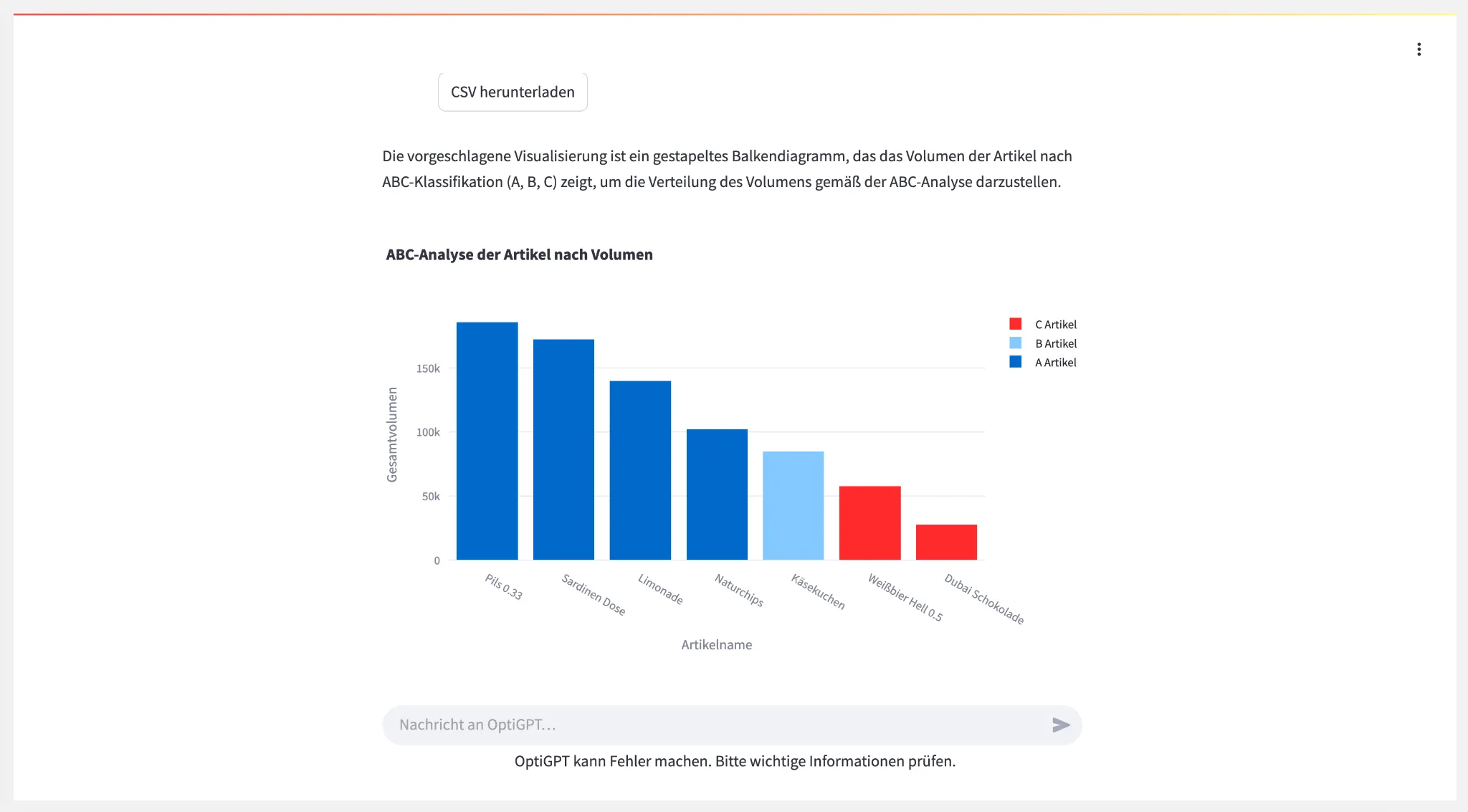
With OptiGPT, companies can perform a variety of analyses to optimize their supply chain. This includes creating ABC analyses to categorize products according to their sales volume and importance to sales. In addition, accurate forecasts of sales volume can be created for the highest-volume items, enabling forward planning.
OptiGPT analyzes changes in inventory levels to identify trends and fluctuations that are important for inventory control. In addition, the system offers the option of identifying particularly volatile items, enabling better risk assessment and management. All these analyses can be flexibly queried and displayed in clear diagrams or exportable tables, such as Excel, to support data-based decisions.
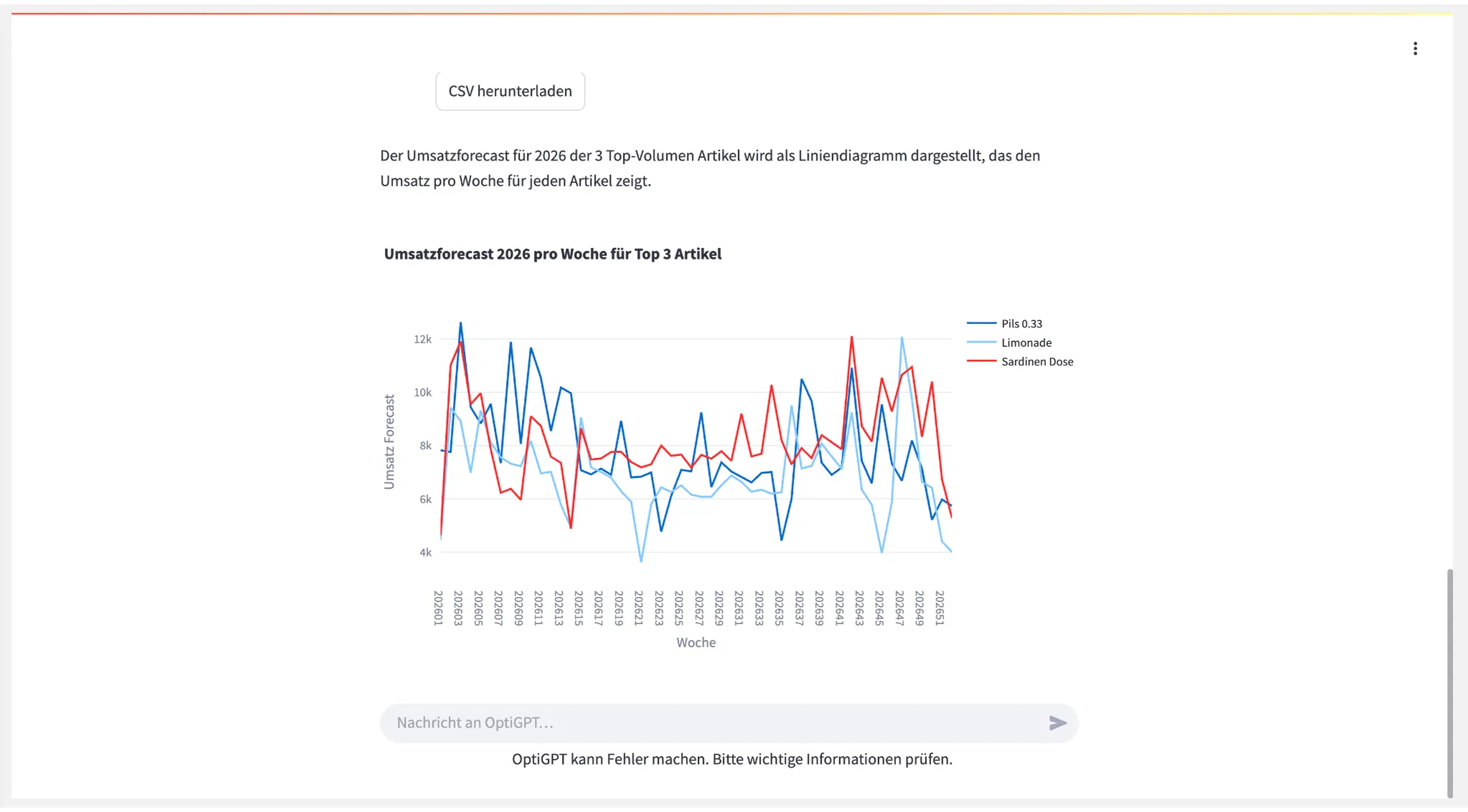
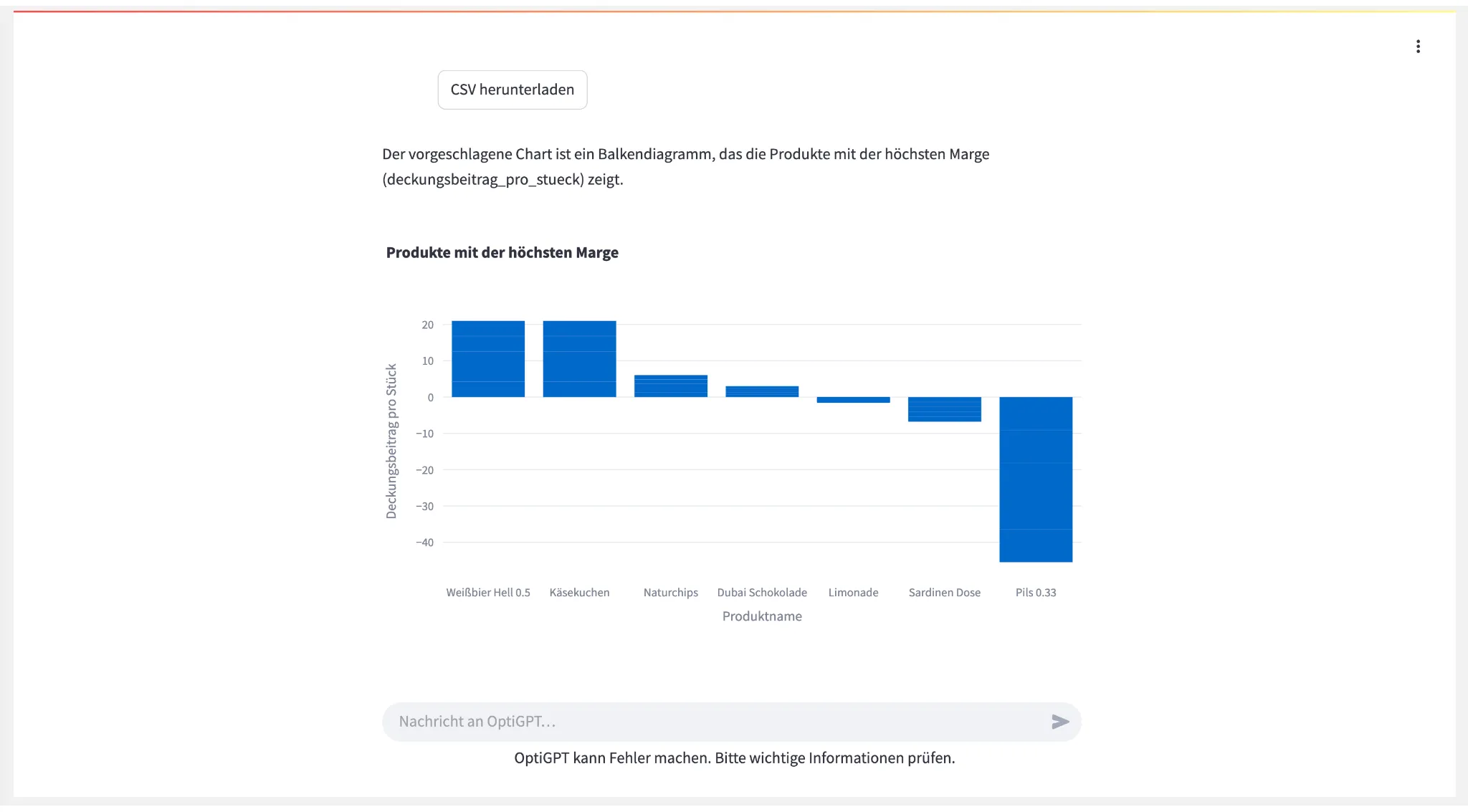
Generative AI models are used in OptiGPT to optimize the analysis and planning processes in the supply chain. These models use machine learning to identify patterns and correlations in large amounts of data and generate predictions and recommendations based on them. For example, generative AI models can create sales forecasts by analyzing historical sales data and taking into account future trends and seasonal fluctuations.
They also support the dynamic creation of ABC analyses and the identification of inventory changes by flexibly responding to user requests and delivering customized analyses in real time. In addition, the models can simulate complex scenarios, such as the effects of inventory bottlenecks or production changes, and thus provide a sound basis for decision-making. By using these AI models, OptiGPT enables more efficient planning and data-driven optimization of supply chain processes.
Reduce inventory levels while maintaining high service levels.
Automated replenishment plans and seamless supplier coordination.
Ensure material availability and accurate packaging requirements planning.
Your AI assistant for data-driven decision-making in supply chain management.
Simulate supply chain “what-if” scenarios quickly and reliably.