
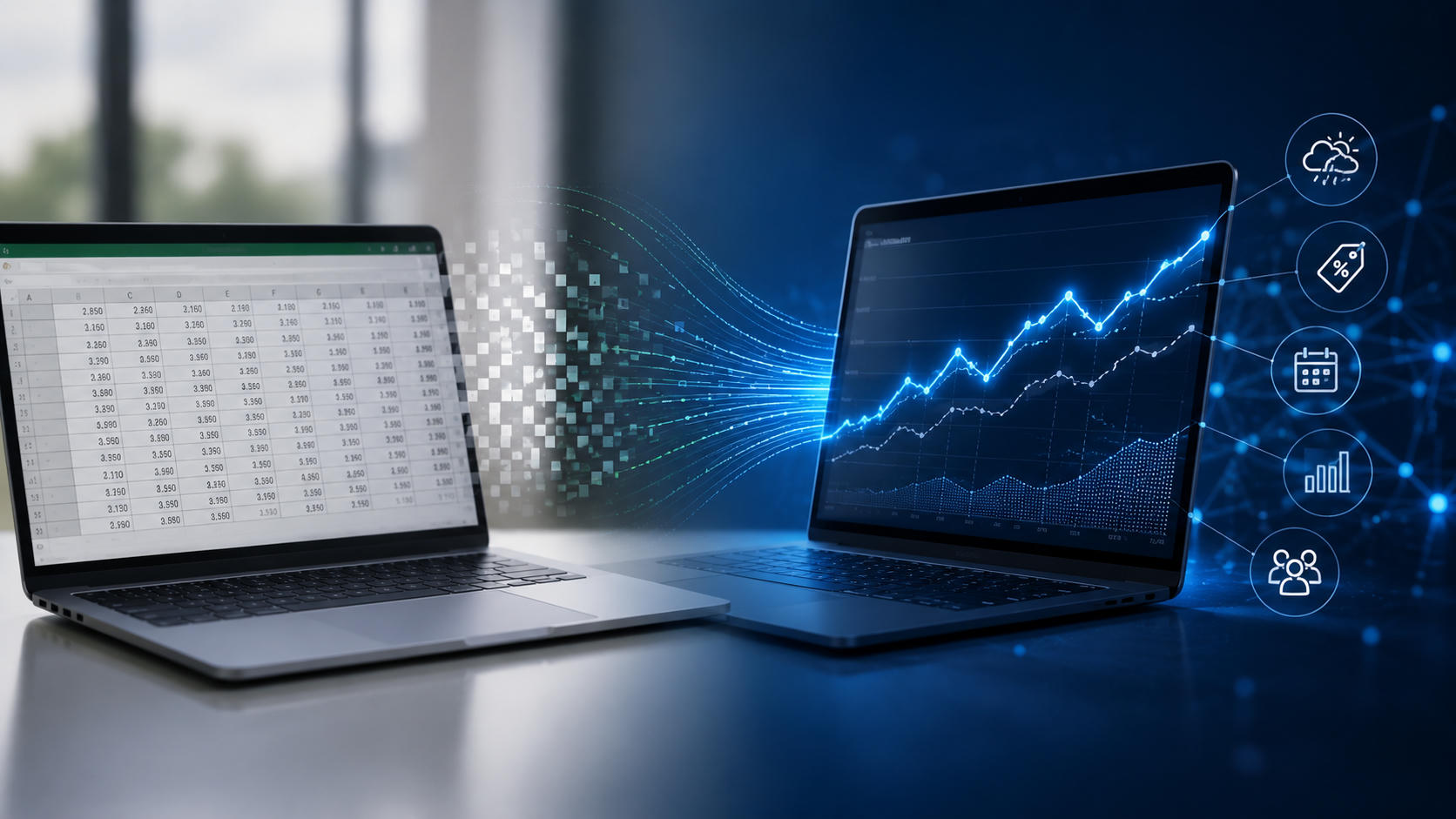

For many years, Excel has been one of the most widely used tools in businesses. Whether for demand planning, budgeting, or reporting, spreadsheets are flexible, familiar, and quick to use. Especially in mid-sized companies, Excel often serves as the foundation for forecasting and planning processes. However, business conditions have changed significantly. Volatile markets, fluctuating demand, rising raw material costs, complex supply chains, and rapidly changing consumer behavior make forecasting more challenging than ever. Companies need to process significantly more data and respond to changes much faster. This is where Excel increasingly reaches its limits.
While spreadsheets remain a valuable tool for analysis and reporting, they are often no longer sufficient for modern forecasting processes. Companies need solutions that automatically process data, identify patterns, and continuously improve forecasts.
Why Forecasting Has Become More Complex
The days when historical sales data alone were enough to create reliable forecasts are long gone. Today, demand is influenced by numerous factors at the same time. These include weather conditions, seasonal fluctuations, retail promotions, public holidays, regional differences, and short-term market developments. In addition, external influences such as inflation, supply chain disruptions, and changing consumer behavior further increase planning complexity.
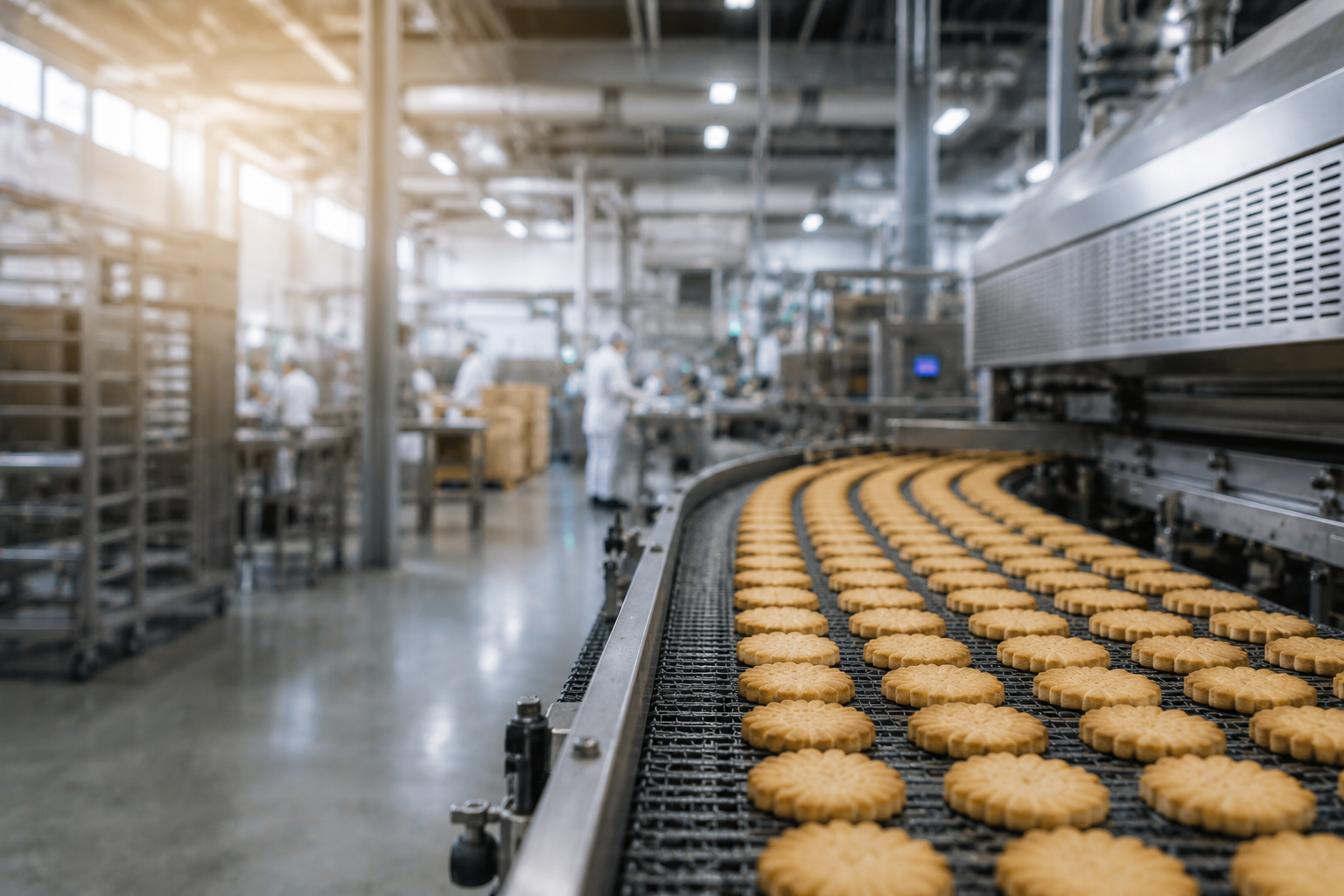
Companies in the FMCG, food, beverage, and cosmetics industries are therefore faced with the challenge of managing thousands of products, customers, and sales regions simultaneously. The larger the product portfolio and the more dynamic the market, the more difficult it becomes to create reliable forecasts using manual processes.
The Biggest Limitations of Excel in Forecasting
Excel offers companies a high degree of flexibility. However, this very flexibility often becomes a challenge when forecasting processes grow more complex. Many organizations work with multiple versions of the same spreadsheet. Data is consolidated manually, formulas are adjusted, and forecasts are regularly exchanged via email. Even minor input errors can distort forecasts and have far-reaching consequences for purchasing, production, and inventory levels.
In addition, Excel has only limited capabilities when it comes to incorporating external influencing factors. Weather data, promotions, and market trends often have to be maintained manually or are not included in planning at all. As a result, forecasts are largely based on historical sales figures and fail to adequately reflect current market developments. As data volumes continue to grow, maintenance efforts, the risk of errors, and coordination between departments all increase. Forecasting becomes slower, less transparent, and less reliable.
The Impact of Inaccurate Forecasts
Inaccurate forecasts affect nearly every part of the supply chain. When demand is overestimated, companies face excess inventory, high storage costs, and, in the worst case, food waste. When demand is underestimated, stock-outs, production bottlenecks, and dissatisfied customers become real risks. Purchasing and production teams also come under pressure when short-term adjustments become necessary. Resources are used inefficiently, production schedules require constant revisions, and planning reliability declines. In the FMCG sector, even small forecasting errors can have significant financial consequences.
How AI Is Transforming Forecasting
Artificial intelligence does not replace Excel, it complements it where traditional spreadsheets reach their limits. AI-powered forecasting solutions automatically analyze large volumes of data and identify patterns that would be difficult for humans to detect. In addition to historical sales data, forecasts also incorporate external factors such as weather conditions, public holidays, promotions, and seasonal trends. The models continuously learn from new data and automatically improve their forecasts over time. This results in significantly more accurate predictions, enabling companies to respond faster and make more informed decisions.
Instead of spending valuable time on manual calculations and data maintenance, planners can focus on evaluating scenarios and making strategic business decisions.
From Forecasting to an Intelligent Supply Chain
Modern forecasting solutions do not view demand in isolation. Instead, they provide the foundation for integrated planning across the entire supply chain. Accurate demand forecasts enable better production planning, optimized inventory levels, and more efficient purchasing processes. As a result, companies reduce overproduction, improve service levels, and make better use of their available resources.
How Optiwiser Supports Companies with Forecasting
Optiwiser's AI-powered demand planning solution has been specifically developed for the needs of the FMCG, food, beverage, and cosmetics industries. The platform analyzes historical sales data alongside external influencing factors to automatically generate highly accurate demand forecasts. At the same time, Optiwiser connects forecasting with production planning, inventory optimization, and purchasing planning, creating an intelligent, end-to-end planning process.
Companies benefit from:
● More accurate forecasts
● Lower forecast errors
● Reduced inventory costs
● Less excess inventory
● Higher service levels
● More efficient production processes
● More sustainable resource utilization
Learn more about our solutions for Demand Planning, Production Planning, Inventory Optimization, and Purchase Planning.
Conclusion: Excel Remains a Valuable Tool—AI Makes Forecasting Future-Proof
Excel will continue to play an important role in many business processes. However, manual planning alone is often no longer sufficient to meet today's forecasting requirements. Companies that adopt AI-powered forecasting solutions build the foundation for more accurate forecasts, more efficient processes, and a more resilient supply chain. They respond faster to market changes, reduce costs, and make decisions based on real-time data rather than relying solely on past experience.
Optiwiser helps companies successfully navigate this transformation with intelligent forecasting solutions specifically designed for the FMCG industry.
Rethink Your Forecasting
Are you still planning demand primarily with Excel? Discover how AI can improve forecast accuracy, automate planning processes, and optimize your supply chain.
Schedule a meeting today and discover the potential of Optiwiser.

.png)