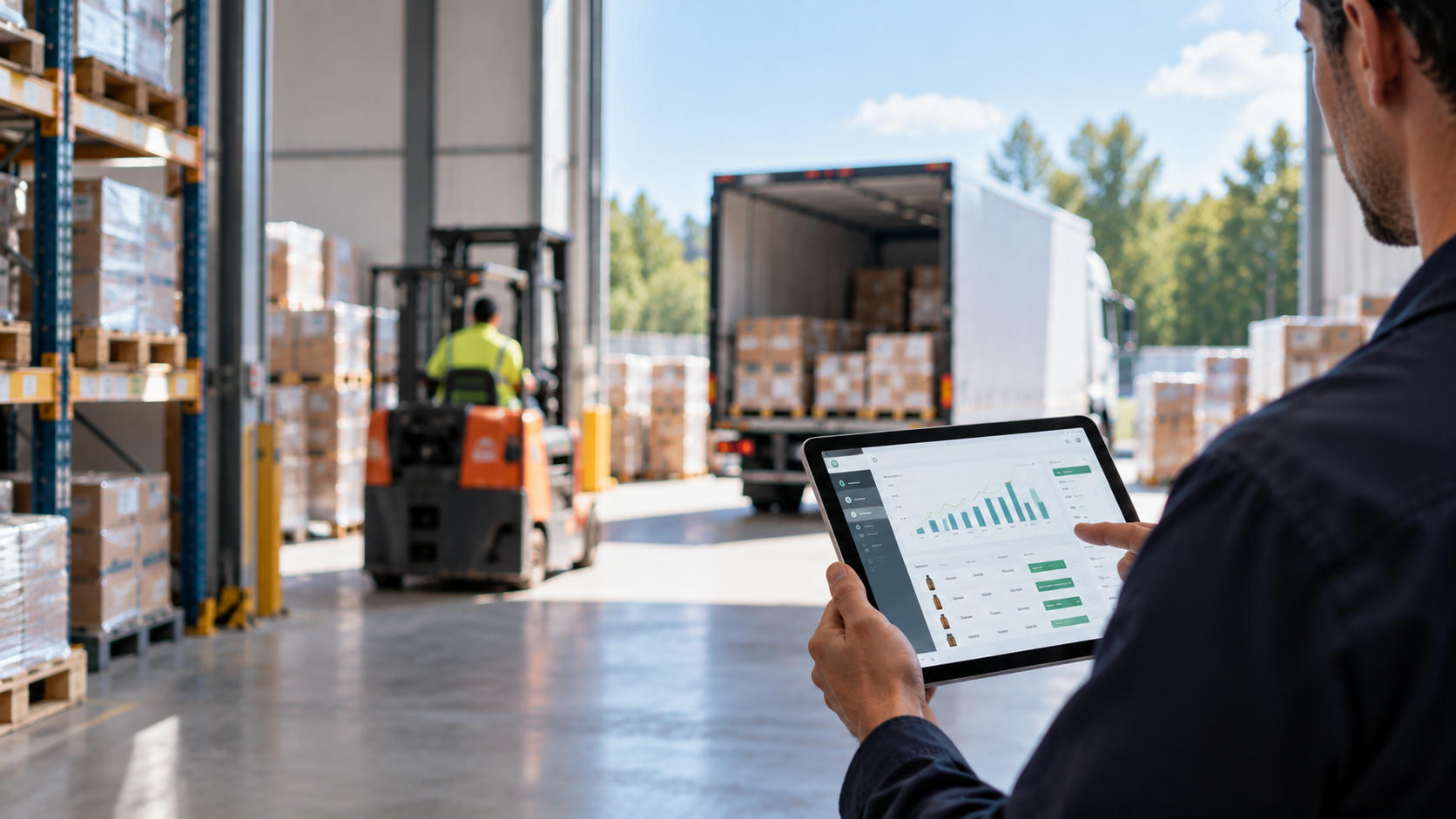

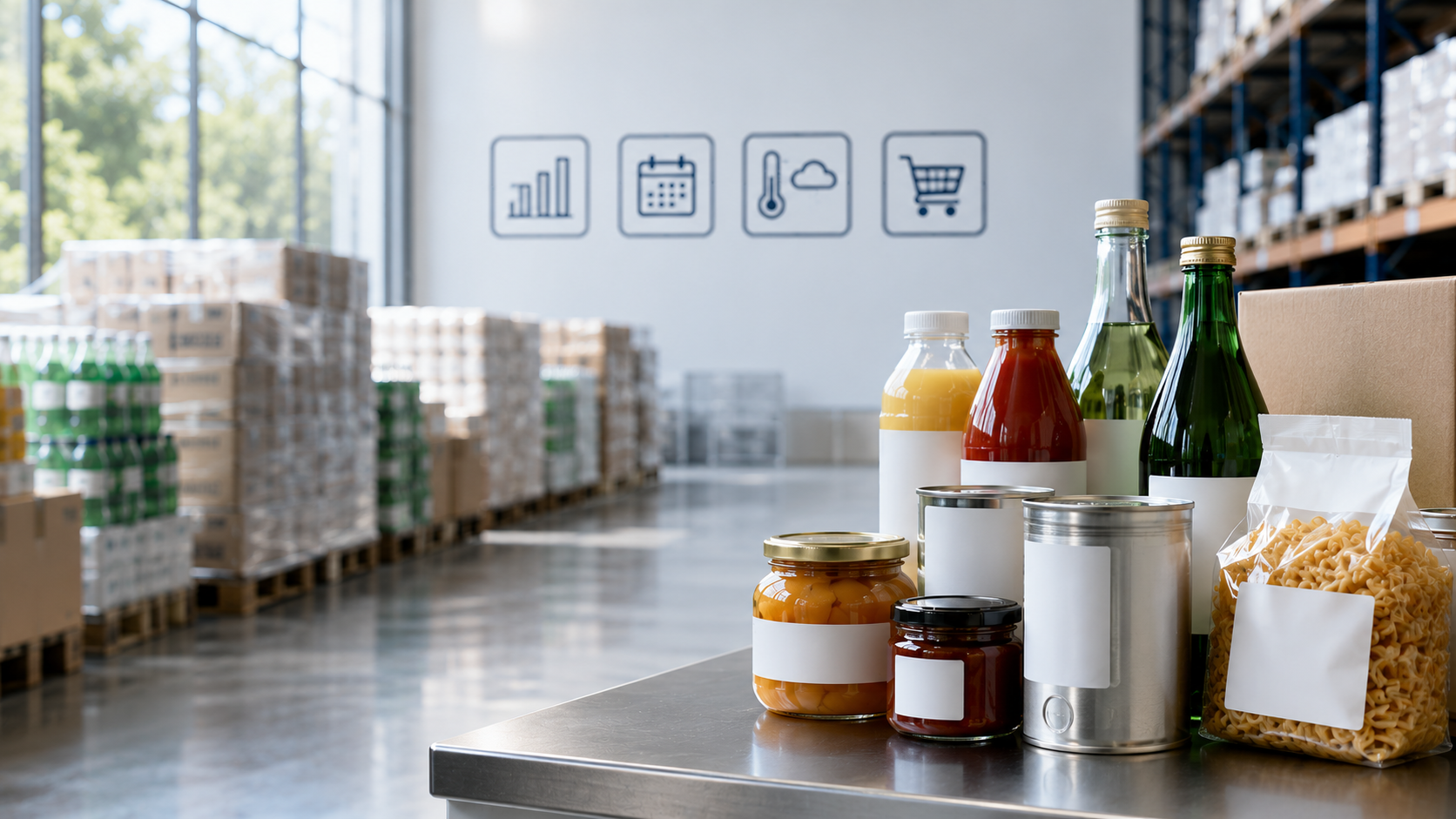

No other industry combines so many planning variables at once: products with short shelf lives, highly volatile demand driven by promotions, holidays, and weather events, tight production windows, and at the same time high requirements for delivery reliability and freshness. The consequences of poor planning are felt particularly directly in this industry: overproduction means food waste and write-offs, underproduction means delivery failures and frustrated retail partners. And the margin for error is shrinking — rising raw material costs, growing SKU complexity, and increasing sustainability requirements are adding to the pressure.
This is exactly where AI-powered planning comes in: not as an abstract technology promise, but as an operational lever that leading FMCG companies are already using today to reduce costs, optimise inventories, and secure delivery reliability.
What Makes Planning in the Food & Beverage Industry So Complex?
Before AI can help, it's worth understanding the root causes of planning complexity. Four structural challenges dominate the industry:
Seasonality & Promotional Business
Grilling season, Christmas, football events, demand peaks are predictable, but hard to quantify. Classical forecast models regularly underestimate the scale and timing of these spikes.
Best-Before Date Management & Food Waste
Short best-before dates leave no buffer for overproduction. Every inaccurate forecast translates directly into write-offs, disposal costs, and CO₂ emissions.
Supply Chain Volatility
Raw material availability, supplier failures, and price volatility make it difficult to keep purchasing and production stable, especially with international suppliers.
Growing SKU Complexity
More variants, more pack sizes, more channels. The number of items to plan is growing while team planning capacity stays the same.
The Core Problem: Excel-based planning does not scale with this complexity. Manual forecasts rely on historical experience and past patterns, they cannot process external signals (weather, promotions, seasonal effects) or non-linear patterns in large datasets. The result: structural over- and understocking, high manual effort, and reactive instead of proactive planning.
Four Areas Where AI Makes the Difference
AI-powered planning is not a single tool, but an integrated approach that improves multiple planning disciplines simultaneously. These four areas are particularly relevant in the food and beverage industry:
01 · Demand Forecasting
AI models analyse historical sales data together with external signals — weather data, holiday calendars, trade promotion announcements, price elasticities. The result are forecasts that are not only more accurate, but also adapt automatically to changing patterns, without planners having to manually update every exception.
Case example: A beverage manufacturer no longer forecasts sales for its grilling range solely based on the previous year, but by incorporating weather forecasts and regional event calendars — reducing out-of-stocks during peak season by up to 30%.
02 · Inventory Optimisation
Instead of static safety stocks, AI calculates dynamic buffers — individually for each item, each location, and each demand situation. This reduces tied-up capital in slow-moving SKUs while simultaneously securing availability for fast-moving products.
Case example: A food manufacturer reduces its average inventory by 18% without compromising delivery performance — through item-level safety stock calculations that are recalculated weekly.
03 · Production & Detailed Scheduling
AI-powered production planning takes into account capacity constraints, changeover times, minimum order quantities (MOQ), and material availability simultaneously. Bottlenecks are identified early and alternative scenarios are automatically suggested — before they turn into delivery problems.
Case example: A brewery no longer plans its filling capacity for events and promotional business manually, but uses AI models to simulate scenarios for different demand trajectories, gaining planning confidence while reducing post-event overstock.
04 · Food Waste Reduction Through Best-Before-Driven Planning
AI can integrate best-before dates directly into sales and production planning: products with shorter shelf life are prioritised in allocation, production quantities are calculated based on realistic sell-through speed. The result is a significant reduction in write-offs and disposal costs.
Case example: A dairy company reduces its write-off rate by 22% through best-before-integrated sales planning, without any loss of on-shelf availability.
Is AI-Powered Planning Right for Your Company?
AI planning is not a silver bullet — and not necessarily the right solution for every company from day one. These questions will help you assess whether the timing is right:
✓ You plan more than 200 active SKUs and notice that manual forecasts regularly lead to over- or understocking.
✓ Your demand is strongly seasonal or promotion-driven, and classical prior-year comparisons no longer deliver reliable forecasts.
✓ You are losing significant margins through food waste, write-offs, or emergency deliveries.
✓ Your planning team spends more time on data maintenance and exception handling than on strategic planning.
✓ You want to better align production capacities and raw material purchasing with actual demand — without weeks-long planning cycles.
Why Optiwiser?
Optiwiser is not a generalist software. We specialise in the planning requirements of the FMCG industry — with deep expertise in food, beverages, and consumer goods. Our AI models were built for exactly the complexity that defines your day-to-day operations: seasonality, best-before management, promotional planning, multi-channel sales. No extensive customisation required, out-of-the-box solutions for FMCG-specific challenges.
Go Deeper
All topics described here are part of our integrated AI planning platform. Learn more about the individual areas:
→ AI-Powered Supply Chain Planning
Ready to Take Your Planning to the Next Level?
Discover in a personal demo how Optiwiser solves the planning complexity of your FMCG processes, practical and without buzzwords.
.png)